

Renewable energy technologies
There are numerous sustainable, low carbon emission technologies which fall under the heading of ‘Renewable Energy’ with many different devices aiming to harness tidal energy to food waste and we have had experience of many of them as well as the related Government regulations and incentive schemes.
For the domestic and small industrial user the most well developed and practical examples which are being supported by the Government’s Microgeneration schemes can be simply summarised as follows:
Direct Electricity generation
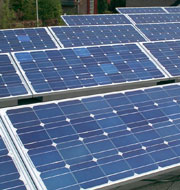
– which you can use yourself or sell back into the gridSolar Photovoltaics (PV) – Using panels which can be installed on your roof, an outhouse or even free standing in the garden or on a flat roof
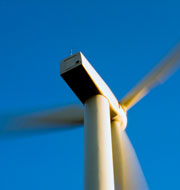
Micro Wind –A small scale wind turbine either with a horizontal axis (like a windmill) or a vertical axis. Normally free standing on its own foundations.
Micro Hydro – a small scale water turbine which is completely dependent on the site having a relatively large fall and/or a large volume of water, a regular supply of water throughout the year and being close to the electricity grid.
Heat and gas generation
Some of these technologies use the heat or gas generated to create electricity indirectly
Heat Pumps- An electrically driven pump that transfers low temperature heat (for example in the ground or in the air) and concentrates the energy to provide a higher temperature output (for example to heat a house). It uses the same technology as a fridge or air conditioner.
Biomass – This covers a number of different technologies including wood fired boilers, composting of a variety of biodegradable matter (from vegetation to cow slurry and food waste) and anaerobic digestion. Anaerobic digesters act in a similar manner to composting by bacterial biodegradation of the feedstock but carry it out in the absence of oxygen which means that they are designed.
Micro CHP (Combined Heat and Power) – The main unit generates heat in a conventional way (eg a gas condensing boiler) but it has an additional unit attached to it which uses the heat (which is normally exhausted to atmosphere) to generate some electricity. The first commercially available small units are just being introduced to the UK market.